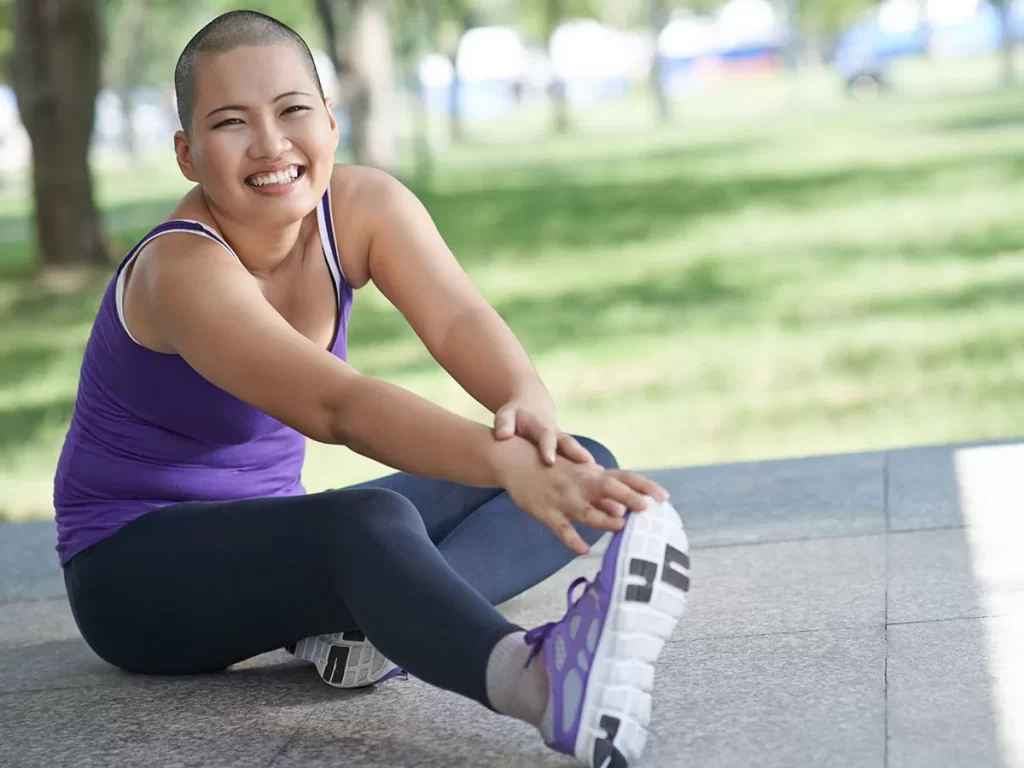
mature lady with scarf on head smiling at the camera
womens wellness after cancer logo

Women's Wellness After Cancer Program

Cancer treatment can be very intensive and it can be challenging to transition from this high level of support into ‘normal’ life and determine what a healthy lifestyle looks like. In particular, you might have a number of treatment related side effects that need managing.

Research has revealed that certain lifestyle factors and health behaviours can have a positive impact upon quality of life, chronic disease risk factors and other health areas for women after cancer. This data has been used by leading health researchers at Griffith University to create a 12-week structured program to help support women through their journey of achieving a healthy lifestyle after cancer treatment, whatever stage of life they may be at.

The program is the brainchild of Professor Debra Anderson, one of Australia's leading researchers in Women's Health. For more information about the research behind the program go to DAWN.

WHAT IS THE AFTER CANCER PROGRAM?

The Women’s Wellness After Cancer Program is a healthy lifestyle program to support individuals recovering from cancer treatment. It is focused on improving health and wellness in women who have had breast, blood, or gynaecological cancer. This program also has two sub-branches: Women’s Wellness After Cancer, and Younger Women’s Wellness After Cancer.

The 12-week program consists of 4 x individual consultations that focus on improving healthy lifestyle habits including physical activity, healthy eating, better sleep, and improving quality of life.

  • Week 1

    Initial consultation (1)
  • Week 3

    Review consultation (2)
  • Week 7

    Review consultation (3)
  • Week 12

    Final consultation (4)

The cost of the program is $435 with Medicare or Private Health rebates available. This includes 4 x individual consultations with our Women’s Health and Oncology Specialist Exercise Physiologists, Vicky Graham (specializing in midlife/menopause) and Tamika Hassum (specializing in younger women), and their Women’s Wellness Journal.

This program is available to be delivered face to face or virtually anywhere in the world.

mature lady with scarf on head smiling

WHO IS THE AFTER CANCER PROGRAM FOR?

The Women's After Cancer Program is for any woman who is a cancer survivor for those who have had breast, blood, or gynaecological cancer. The program has two sub-branches that can be adapted to your specific phase of life, whether that be midlife/menopause or the younger years, and the associated health challenges that might arise in these stages.

We provide you with support in managing your symptoms, improving quality of life and finding what a healthy lifestyle looks like for you. No matter what stage of life you are at, any challenges you are facing, we can work with you in our 12-week program and make a difference in your life.

PREVENTION THROUGH A HEALTHY LIFESTYLE

All of our programs focus on maximising quality of life, management of symptoms and prevention of chronic disease subsequent to cancer treatment. We know, through the research conducted, how powerful lifestyle strategies are in achieving this, including nutrition, activity, managing sleep and stress. We certainly aim to improve the quality of your physical health, but you will also likely find improvements in your mental health with this program.

The benefits of attending our Women's Wellness After Cancer Program:

  • Manage or minimise treatment related or general fatigue
  • Improve your heart and lung fitness
  • Build up your strength
  • Help to maintain a healthy body composition
  • Reduce feelings of depression or anxiety
  • Minimise the risk of diseases such as diabetes

STARTING YOUR WELLNESS JOURNEY TODAY

As a multidisciplinary allied health clinic, we focus on improving your mindset and health so you can be the best version of yourself. We believe in a unique and tailored approach when it comes to women's health, and we are passionate about improving quality of life for all our patients.

Your health is important so don't put your wellness off! We encourage you to take a proactive step towards living your best life after cancer treatment.

Contact us to find out more information

*Private health and Medicare rebates may apply

LATEST RESOURCES

The Hidden Link: Breast Cancer and Cardiovascular Disease

Breast cancer and cardiovascular disease may seem like two distinct conditions, but many people do not realise that there is a significant link between the two. Essentially, research has shown that women with breast cancer are at a higher risk of developing cardiovascular disease, and vice versa.
Moving Forward: How Exercise Can Support Women with Ovarian Cancer

Ovarian cancer is a life-changing diagnosis, and the treatments that follow—surgery, chemotherapy, or targeted therapies—can take a significant toll on both body and mind. Many women face fatigue, pain, reduced fitness, and changes in mood or confidence. While exercise might not be the first thing that comes to mind during cancer treatment, research now shows that the right kind of movement can be one of the most powerful tools to support recovery and long-term wellbeing.

Breast Cancer and Exercise Therapy

Breast cancer is the most diagnosed cancer, with one in eight women diagnosed in Australia. While advancements in treatment have significantly improved survival rates, many individuals face ongoing challenges related to fatigue, reduced strength, mental health impacts and overall quality of life. Exercise has widely been recognised as a powerful tool in cancer care, offering benefits that have led to it being advocated as a standard part of cancer care. Let’s dive into the evidence-based recommendations.

Returning to exercise after hysterectomy

Hysterectomy is one of the most common types of elective surgeries for Australian women, however it’s not exactly the most talked about! We tend to understand that there is a period of rehabilitation after any major abdominal surgery, but it can be challenging to know where to seek help on how and when to return to physical activities.